
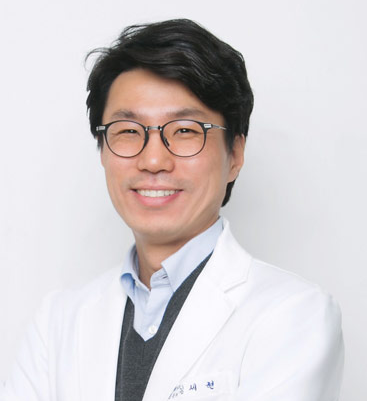
Jin Shixian_Nasal Expert at Beijing Hanxiao Plastic Surgery Hospital (金世贤)
Hotline:
400-616-6769
WeChat:
wuyoubianmei (Click to Copy)
Rhinoplasty, Facelift
Biography
Areas of Expertise
Rhinoplasty, Facelift
Biography
Personal ProfileDirector Kim Se-hyun graduated from the Department of Clinical Medicine at Korea University, one of the world’s top 200 universities, and then pursued further training at the University of California, Irvine (UC Irvine), which has globally renowned plastic surgery expertise. After completing his studies, he returned to Korea and served successively as director of plastic surgery hospitals including Goreand, Banobagi, Yeowon, and Emeizhi. He integrated world-leading plastic surgery concepts and techniques with Korean local culture and developed a series of experiences and methods to improve plastic surgery outcomes. He currently works at Beijing Han Xiao Plastic Surgery Hospital.
In particular, he introduced and refined the rhinoplasty techniques of Daniel, Dallas, and Tebbetts, identified nasal morphology and surgical methods better suited to Asians, and enabled many Korean celebrities who had been sidelined because of flat facial features to make successful comebacks. He overturned the Asian plastic surgery textbook theory that “orbital fat must be removed during lower blepharoplasty” and introduced the Western surgical approach of fat repositioning with orbital septum reinforcement, preserving fat’s physiological functions of supporting the eyeball and nourishing the skin. This caused a great sensation in Korea and across Asia and was reported by multiple media outlets, including KCTV and the Korea News Agency.
From 2013 to 2015, Director Kim accepted invitations from several Korean plastic surgery academic associations to discuss methods for further refining rhinoplasty and eye surgery at Asian regional seminars. This drew considerable attention from Chinese online media such as Sina and NetEase to Korean nose and eye plastic surgery, once again igniting a surge of Chinese customers traveling to Korea for plastic surgery. He was selected for SoYoung’s Asia-Pacific “User-Trusted Korean Doctor Award.” In 2016, as a leading figure in Asian rhinoplasty, Director Kim again authored an “Outstanding Paper at the World Rhinoplasty Congress.” At this conference, he and the world-renowned artist Mr. Han Xiao hit it off immediately. He embraced Director Han Xiao’s natural bionic aesthetic philosophy, researched and designed a bionic rhinoplasty method suitable for Asians, and specializes in lower blepharoplasty with fat repositioning and orbital septum reinforcement. After careful consideration, he joined Han's Plastic Surgery in 2016.
Director Kim Se-hyun said, “I will treat every Chinese customer with sincerity, equally as Korean customers, and I will not let down everyone’s expectations and trust.” Director Han Xiao said, “The reason I invited Director Kim Se-hyun is that we Shandong people judge people by character first and technical skill second. Director Kim is sincere, cheerful, and straightforward. I trust him.”
Since childhood, Director Kim Se-hyun has enjoyed making things by hand, such as making small models and clay works. He is particularly interested in art and often enjoys drawing figures and sculpting. After becoming a plastic surgeon, these personal inclinations influenced his career direction, leading him to choose fat grafting and eye and nasal plastic surgery. He has strong spatial perception (he excels in geometry in mathematics, has strong map comprehension, and never forgets a route once seen). Combining these talents and personal inclinations, he ultimately felt that rhinoplasty was the field best suited to him.
Regarding differences between Chinese and Korean rhinoplasty, Director Kim Se-hyun believes that Korean celebrities generally have semi-straight nasal bridges, which look natural; if the nasal bridge appears too straight, it looks unnatural and the surgery can be noticeable. An upturned nasal curve appears gentle and feminine; however, if the angle between the nasal tip and lips is not well designed, the nostrils may be fully visible, so determining this angle is very important. A straight nose appears stronger and more gentlemanly; if a straight nose is designed without considering overall facial morphology, the face can appear very long. Currently in Korea, a shape between an upturned and a straight nose is very popular, and many such surgeries are performed.
Director Kim said, “Now no matter how difficult the nasal or eye surgery, I can find a solution. Although nose and eye surgeries require great effort, I still find them endlessly fascinating. This is the fundamental reason I find this work so interesting and rewarding.”
Although eye surgery may seem minor, it contains profound complexity; a one-millimeter difference can affect the surgical result. As described in the ancient Chinese poem “Deng Tuzi Hao Se Fu” (Ode to the Lecherous Deng Tuzi), “Add one fraction and it is too long; subtract one fraction and it is too short.” Many plastic surgeons create double eyelids that meet aesthetic measurements, but the gaze may be dull or fierce, lacking aesthetic appeal. Thanks to his years of drawing experience, Director Kim Se-hyun has studied and copied the eye morphology of various races, occupations, and personalities. He skillfully uses the height and curvature of the double-eyelid crease, the size and shape of the medial and lateral canthi, and the direction and tension of sutures to adjust the overall eye shape. Postoperatively, the eyes not only meet aesthetic measurements but also have a clear, lively, and expressive gaze.
Regarding facial lifting, which has become popular in China and Korea in recent years, he believes that facial lifting can be divided into three layers: the deep fascial layer, the superficial fascial layer, and the epidermal layer. For the deep fascial layer, Korean imported lifting threads (Reeborn threads) can be used, fixed with mesh sheets at the thread ends and incisions; the superficial fascial layer is fixed with cog threads; the epidermal layer is treated with short protein threads. Lifting at all three layers produces excellent results and can comprehensively improve lax skin at the mandibular border and nasolabial folds.
Specialties: Rhinoplasty, facial lifting.
Plastic Surgery Cases: